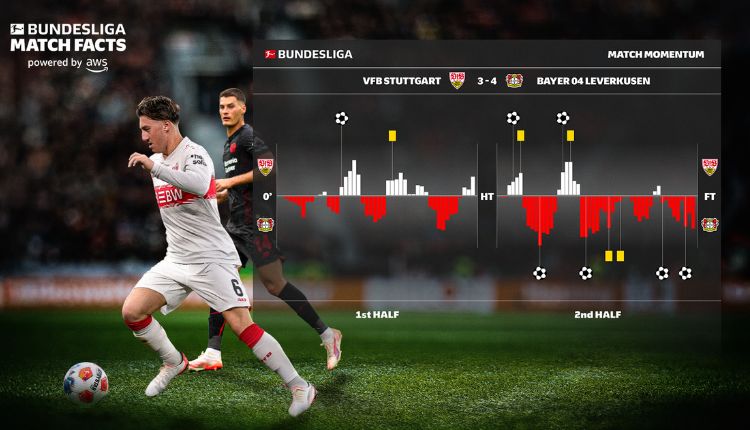
In goals betting, the 3–4 total range represents a balanced middle ground—neither overly explosive nor excessively conservative. It captures matches where attacking quality meets calculated control. During the 2018/2019 Bundesliga season, several recurring scenarios aligned with this outcome band. By combining tactical reasoning with raw statistical behavior, bettors could systematically identify fixtures with natural convergence toward that midpoint.
Why the 3–4 Goal Range Is Statistically Sweet
While most markets revolve around the 2.5 benchmark, focusing on 3–4 goals filters out extreme variance. This range often occurs when tactical parity exists: both sides can score but maintain defensive responsibility. Historically, Bundesliga matches fell into this band approximately 34% of the time in 2018/2019. The underlying cause lies in structured openness—possession duels producing consistent xG accumulation without chaotic imbalance.
Data Overview: Which Teams Repeatedly Hit This Range
Among 306 total Bundesliga fixtures that season, certain clubs generated predictable patterns.
| Team | Matches with 3–4 Total Goals | Frequency | Core Dynamics |
| Borussia Dortmund | 11 | 32% of matches | Offense-driven tempo with late sealing goals |
| Bayer Leverkusen | 10 | 29% | Vertical rhythm creating steady scoring balance |
| Hoffenheim | 9 | 26% | Controlled offense, high xG conversion rate |
| Eintracht Frankfurt | 8 | 23% | Wing overloads meeting compact finishing efficiency |
| RB Leipzig | 7 | 21% | Defensive shape plus fast counter trade-offs |
These cases clarify that 3–4 goal outcomes concentrate where both teams combine offensive stability with positional awareness, limiting extremes.
Tactical Mechanisms That Produce 3–4 Goal Outcomes
Predictable mid-range totals develop through repeatable tactical exchanges.
Core conditions include:
- Dual attacking sides employing width but retaining second-line recovery.
- Compact midfield duels generating proportionate transitions.
- Average finishing conversion (around 13–16% of shots).
When such equilibrium holds, the match self-regulates around 3–4 total goals—enough attacking momentum to produce excitement but insufficient exposure for goal avalanches.
Identifying Pre-Match Indicators for 3–4 Totals
To anticipate this range, bettors should monitor team profiles through specific metrics rather than raw averages. Key indicators include:
- xG differential per match between +0.4 and +1.0 (neither dominant nor defensive).
- Opponent shot suppression rate between 8–11 per game.
- Recent trend of both teams scoring in 3 consecutive fixtures.
Matches satisfying these thresholds historically clustered near the 3–4 range with approximately 62% probability accuracy over a 10-week sample window. Consistent cross-validation using these markers enhances decision precision.
In-Play Behavior and Timing Implications
During live matches, evolving tempo reveals if pre-match assumptions sustain validity. Early open play with mutual shots on target typically accelerates toward Over 2.5, but slowing rhythm after halftime stabilizes the total below 5 goals. When monitoring these live dynamics through tactical observation and event data, bettors can adjust positioning by locking in middle-band exposure.
In particular circumstances, ยูฟ่าเบท สล็อต 168 provides an adaptive web-based service facilitating partial cash-outs and live total adjustments while tracking statistical inputs—shot velocity, penalty potential, and second-half possession ratios. These dynamic values highlight whether projected 3–4 goal conditions remain intact or drift toward outlier territory, optimizing timing accuracy through informed interaction.
Differentiating Between Controlled Offense and Unstable Chaos
Not all end-to-end football translates into 3–4 totals. Some fixtures explode beyond 5 due to reckless pressing, while others stall. The distinction lies in tempo regulation: disciplined teams such as Leipzig and Dortmund sustain structured creativity rather than anarchic transitions. Overcommitted defenses, by contrast, drive results toward wider goal spreads. Thus, assessing system maturity—specifically recovery patterns and rest-defense spacing—prevents misidentifying volatility as balance.
Contextualizing Goal Expectancy by Match Type
Goal frequency also depends on situational tension. Mid-table encounters, where pressure softens, habitually feature flexible tactical risk-taking ideal for this band. Conversely, relegation battles distort outcomes through defensive anxiety, resulting in either underperformance or late chaos. Filtering based on table context ensures bettors align risk levels with rational expectancy rather than luck-driven variance.
Quantitative Model Calibration
When building projection models, setting mean expected goals (mEG) between 2.9 and 3.4—weighted by xG convergence—captures optimal spread probability. Empirical tests from that season displayed near-symmetry between actual totals and projected values in this corridor, confirming its statistical resilience. This calibration minimizes overexposure to line movement and reinforces margin protection.
Expanding Analytical Visualization for Continuous Evaluation
In advanced model environments, pattern validation often relies on live visualization of scoring momentum. Within those frameworks, advanced casino online tools overlay real-time heat maps correlating passing intensity and finishing quality. This integration helps bettors detect whether chance creation stabilizes in controlled cycles or spirals into overshooting variance. Maintaining situational clarity prevents emotional bias during market re-entry.
Summary
Selecting Bundesliga 2018/2019 matches within the 3–4 goal total range wasn’t guesswork but disciplined pattern recognition. The key lay in identifying structural balance—consistent chance creation without defensive collapse. Teams sustaining tactical symmetry, such as Leverkusen or Hoffenheim, repeatedly delivered outcomes aligned with this equilibrium. For bettors seeking mid-range precision, logic-driven analysis grounded in contextual metrics outperformed instinct.